US Nature4Climate
  • About
  • Science
  • Solutions in Action
    • Building Ambition
    • Conservation IS Climate Action Campaign
    • Economic Benefits Campaign
    • Off the Beaten Path
  • Decision-Makers Guide
    • Science for Decision Makers
    • Natural Climate Solutions Toolbox
    • Discussion & Debate
    • Defining the Terms
  • Nature4Communities
  • Blog
Skip to content
US Nature4Climate
  • About
  • Science
  • Solutions in Action
    • Building Ambition
    • Conservation IS Climate Action Campaign
    • Economic Benefits Campaign
    • Off the Beaten Path
  • Decision-Makers Guide
    • Science for Decision Makers
    • Natural Climate Solutions Toolbox
    • Discussion & Debate
    • Defining the Terms
  • Nature4Communities
  • Blog

Story Tag: Livelihoods

Lightning Creek Ranch: A Win-Win Climate Solution for Ranchers

  • Water
  • Soil
  • Biodiversity
  • Livelihoods

Learn about a win-win climate solution for ranchers.

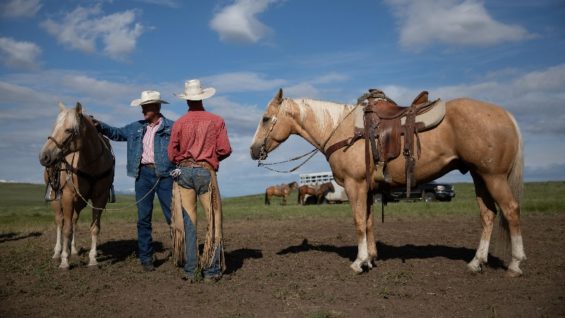
Growing up on a ranch in Eastern Oregon, Dan Probert did all of the things other ranching kids did, such as joining 4H and the Future Farmers of America, to learn about the livestock business.  However, when he first started ranching on his own, he had a sense that to be profitable and sustainable, he needed to question traditional methods of ranching. This eventually led him to The Nature Conservancy (TNC).  In 2017, Dan and his wife Suzy agreed to, in effect, sell the carbon in the soil on their Lightning Creek Ranch to TNC with a conservation easement. 

Aaron Huey © TNC

Native grasslands store significant amounts of carbon in the soil.  The Probert family is keeping 55,000 tons of carbon dioxide out of the atmosphere by improving grazing management practices and preventing the conversion of native grasslands to residential, cropland or energy development improving grazing management. Not only are the Proberts contributing to the fight against climate change, they have improved water quality, prevented soil erosion, and created a new source of revenue for their ranch.

Protecting the soil carbon in grasslands is both an important natural climate solution and a good business opportunity for ranchers. Lightning Creek Ranch is serving as valuable a case study for utilizing carbon offsets to fund grassland protection efforts.

“Because of this conservation easement, Lightning Creek Ranch will always remain a working ranch while also protecting some of the most beautiful and ecologically important lands in the country.” said Dan Probert.  Thanks to the Proberts’ innovative leap of faith, their neighbors are also considering carbon easements as a way to protect their land, preserve ecosystems and generate income.

To learn more about grassland carbon storage potential:  Can Grasslands, The Ecosystem Underdog, Play an Underground Role in Climate Solutions?

Did You Know? Avoiding the conversion of grasslands to cropland can help reduce carbon emissions by up to 107 million metric tons a year – the amount of carbon emitted by 23 million cars in a year. 

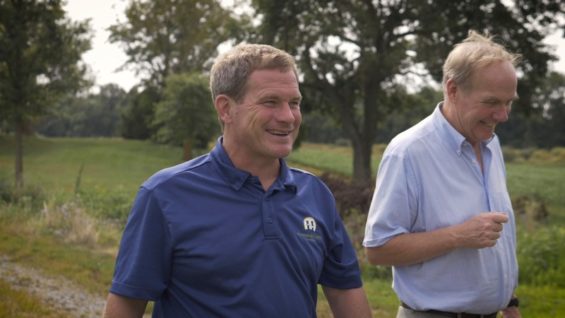
Black Horse Flag Farm: A Productive Partnership for Healthier Soils and a Cleaner Environment

  • Water
  • Soil
  • Livelihoods

Through their nearly 30-year partnership, Trey Hill and Joe Hickman have shown that no-till farming, cover crops, and nutrient management can dramatically improve soil health — leading to a cleaner environment, a healthier financial bottom line, and climate change mitigation.

Katie Schuler

Trey Hill is a man of many talents. As a seasoned farmer, he collaborates with 60 landowners to increase the productivity and the sustainability of their land.  

Since 1992, Trey has leased land from Joe Hickman of Black Horse Flag Farm in Maryland. By working together to improve soil health and effectively manage nutrients, their successful partnership has shown that farms can be productive, profitable and environmentally sustainable. “It’s really a collaboration between the farmer and the landowner,” says Trey. “If we fail with the crops then neither one of us makes any money.”

Trey and Joe have reaped the benefits of implementing a no-till system, managing nutrients, and planting increasingly diverse cover crops. Not only has their work saved them money by reducing fertilizer costs, they have improved the soil health and water quality of the land and locked more carbon into the soil. Natural Climate Solutions have been a win for both Black Horse Flag Farm and for the environment.

Like a ripple effect, the biodiversity of the region has flourished too. Large fish nurseries, horseshoe crabs, and dolphins are now a part of the ecosystem, heralding a healthy working relationship between the farmland and nature.

Most landowners do not even meet the farmers working on their land, but Joe Hickman has realized that close collaboration is the key to success, both for nature and sustained success. “Farms are a long-term play, the more you keep at it the more you realize you have to care about soil health, conservation and the environment,” says Hickman.  By working together to understand the processes and practices that keep the farm healthy and vibrant, Joe Hickman and Trey Hill are headed for an even brighter future.

Learn more about Black Horse Flag Farm

Link to video:  www.nature.org/mdruralsolutions

Did you Know:  According to The Nature Conservancy’s reThink Soil report, each 1% of U.S. cropland adopting an adaptive soil health system could deliver $37 million of on-farm value through greater productivity.

Vermont Land Trust: Sequestering carbon while making breakfast sweeter

  • Water
  • Biodiversity
  • Livelihoods

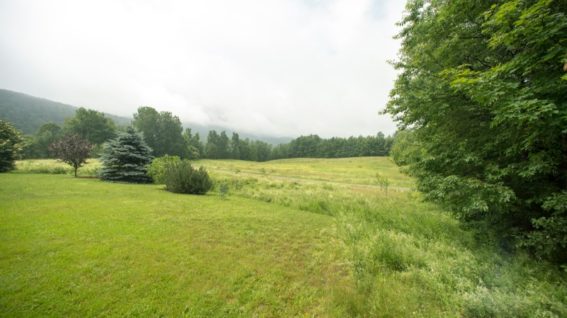
Jessica Boone and Everett McGinley each reap economic benefits by managing healthy maple forests that both store carbon and preserve wildlife habitat.

Caleb Kenna

Jessica Boone and Everett McGinley each own ecologically valuable forest land in the Cold Hollows region of Vermont 

Vermont’s private forests play a key role in mitigating climate change – they store four times as much carbon as the state’s vehicles release each year. Selling forest carbon credits to companies and individuals working to reduce their carbon footprints provides a new source of income for individual landowners like Jessica Boone and Everett McGinley in Vermont’s Cold Hollows region, which helps them protect their forests. Unfortunately, carbon markets can be too costly for most owners of small forest parcels to join.

That’s why the Vermont Land Trust formed Vermont Forest Carbon LLC and teamed up with The Nature Conservancy, the Caron Dynamics Lab at the University of Vermont, and Cold Hollow to Canada, a local land stewardship and conservation organization, helping landowners overcome the cost barrier by working together as a single carbon project. This is the first large-scale aggregated forest carbon project in the country, with fifteen neighbors teaming up to sell carbon credits from their land. Together the landowners and organizations proved that not only can forest carbon offsets be a viable revenue stream for Vermont forestland owners, but through improved management practices, that they can provide enhanced water quality, flood mitigation, species diversification, and many other ecological benefits.

“On the one hand, you’re achieving some cash flow to help support your forest management goals,” says McGinley. “On the other hand, you’re doing something valuable for the planet in helping to reduce the amount of carbon dioxide in the atmosphere – so it’s a win-win, really.”

“We don’t want just a really healthy maple forest.” says Jessica “We want the entire landscape to be healthy. I’m not just looking at how I’m managing my property, I’m also talking to my neighbors.” By making the Vermont landscape more resilient to climate change and providing economic benefits for the forest landowners like Jessica and Everett who help maintain it, this natural climate solution is one that shows great promise for the future.

Learn more:  https://www.vlt.org/forestcarbon

Learn more about Cold Hollow to Canada: https://www.coldhollowtocanada.org/ 

Read more about Jessica Boone’s story: https://www.wcax.com/content/news/Vermont-landowners-come-together-in-Amazon-partnership-project-570200561.html

Did you know: Avoiding the conversion of 1 million acres of forest each year can help keep 38 million tons of carbon dioxide sequestered in trees. 

Tuuk Family Forest: One Family’s Efforts To Keep Their Legacy Alive in Tennessee

  • Biodiversity
  • Livelihoods

Learn about one family’s quest to preserve the forest of their youth through an innovative program that creates new sources of revenue, ensures sustainable forest management and helps address climate change.

Days Edge Productions

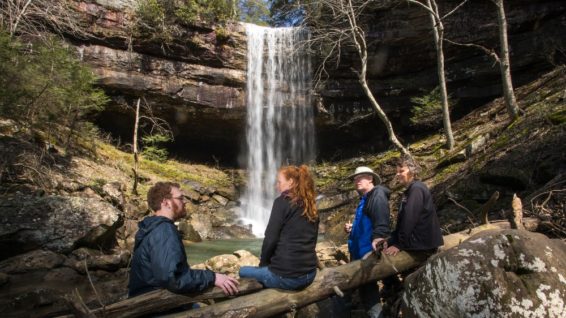
Rebecca and Roger Tuuk own 3,120 acres of forested land in central Tennessee – land that has been in Rebecca’s family since the 1940’s. Rebecca has been wandering these woods her entire life, and wants to preserve it for future generations. In 2016, the Tuuks were the first private landowners in Tennessee to begin working with The Nature Conservancy (TNC) under the Working Woodlands Program, with support and collaboration from World Wildlife Fund (WWF). Thanks to the Tuuks’ innovative leadership and sustainable management, their property is now the most protected private forest in the state.

TNC helped the Tuuks develop an improved forest management plan, obtain Forest Stewardship Council certification for their forest lands and access the voluntary carbon market. Not only will these strategies help preserve the forest for the future, they will also help the family increase the revenue they can generate from their forests. The Tuuks also entered into a conservation easement with TNC, which will make sure their forest will remain forest forever, while also allowing for continued sustainable harvest of wood from their land.

By preserving this forest, the Tuuks are keeping carbon out of the air and storing it in the trees, protecting the biodiversity of the region and maintaining the connective corridors that enable migratory species to thrive.

Under the Working Woodlands Program, Rebecca and Roger Tuuk are not only preserving their family’s legacy for future generations, but also doing their part to make the world a little better for the rest of us. 

Links: 

Learn more about the Tuuk family’s efforts to address climate change through improved forest management.

Learn more about the Working Woodlands program

Video:  WWF Working Woodland video (credit to Day’s Edge Productions / WWF-US). 

Did you know: In the US, researchers have found that every $1 million invested in reforestation and sustainable forest management can support nearly 40 jobs.

Schmitt Family Farm: Proving That Carbon Smart Farming Can Improve Farmers’ Bottom Line

  • Water
  • Soil
  • Livelihoods

Learn about one farmer’s attempt to merge scientific management techniques with regenerative farming practices to improve soil health, enhance the economic viability of his farm and contribute to solving climate change.

Lindsay Morris

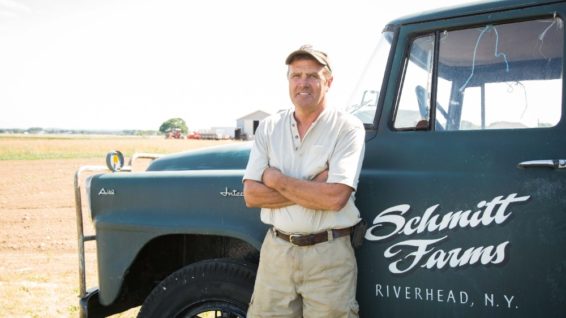
For more than 150 years, the Schmitt family has been growing vegetables on their 250-acre farm on Long Island. But growing dozens of different crops year-round takes its toll on the soil. The Schmitts have experienced first-hand how degraded soils can have a negative effect on farm productivity – leading to erosion, nutrient loss and poor drainage of their land. By addressing poor soil management, the Schmitts have not only improved the health of their farm, but made their land a part of the solution to climate change.

To improve his soil, Phil Schmitt began soil management techniques like cover crops, compost and reduced tillage, along with nutrient management practices like controlled release of nitrogen fertilizer (CRNF). As a result of his work, Phil has since witnessed a 6-fold increase in the percentage of soil organic matter on his land, which also helps capture and sequester atmospheric carbon and put it back in the earth.  With the help of American Farmland Trust (AFT), Phil helped other farmers learn about the benefits of these practices by hosting a Long Island Soil Health Field Day on his property.

In 2018, AFT studied the economic benefits Phil’s new practices had on his 75-acres of sweet corn and found an increased financial return of $2,503 compared to conventional farming methods. “In just one year I saw a positive change,” said Phil. “I had better infiltration and decreased run-off and erosion in my sweet corn fields following heavy rains.” Farmers and ranchers manage nearly one billion acres – about 60 percent of the land in America.  This land can act as a natural carbon “sink” by absorbing vast amounts of carbon dioxide from the atmosphere and storing it in plants and soil. With cases like Phil’s, AFT hopes it can encourage other farmers in the U.S. to adopt similar soil health management techniques for the betterment of their farmland and livelihoods.

Read about more Schmitt Family Farm

Read the full economic case study

Read how the agriculture practices on the Schmitt farm help mitigate climate change

Did You Know? Improved management of nitrogen fertilizers on US farms can prevent the equivalent of between 46 and 144 million metric tons of dioxide from being released into the atmosphere.

Advocating for Conservation Careers

  • Air
  • Livelihoods

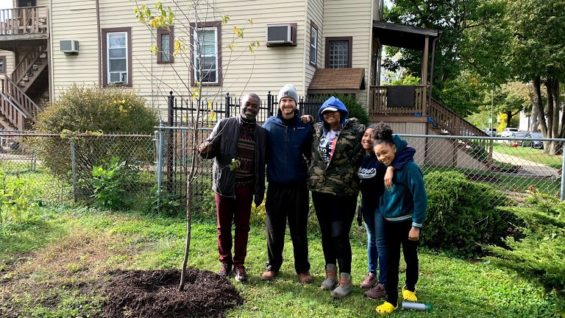
The Imani Green Health Advocates Program is bringing green jobs to Chicago’s South Side.

Rachel Holmes, TNC

This Success Story originally appeared on The Nature Conservancy in Illinois’s website.  

An Environmental Studies degree won’t find much purchase on the South Side of Chicago. At least, that’s what lifelong resident Rachel Patterson thought when she began her job search last summer.


“I just assumed I’d have to move or commute for an opportunity to actually use my degree. But then I found this internship. It looked interesting and was environmentally focused, and I realized it was literally a few blocks from my house. I couldn’t believe it,” says Patterson.


That program was Imani Green Health Advocates, a career development initiative from Imani Village and collaborators Trinity United Church of Christ, Advocate Health Care, Chicago Region Trees Initiative, The Morton Arboretum, The Nature Conservancy, U.S. Forest Service and others. 

Now in its third year, the Imani Green Health Advocates program provides professional development and career training to a small cohort of participants, orienting them toward careers in three areas: environmental health, community health and spiritual health. In practice, their work involves outreach for people in Chicago’s South Side, including the neighborhoods of Pullman, West Pullman, Cottage Grove Heights, Washington Heights, Roseland and Chatham.  The advocates focus on all aspects of health and well-being–physical and mental health, landscape health and spiritual well-being.

The internship program is just one facet of a larger, social enterprise known as Imani Village that has been in the works for over a decade. Pioneered by leaders and parishioners from the Trinity United Church of Christ, Imani Village is a sustainable mixed-use development that is taking root in Chicago’s Pullman community. The 23-acre site is in a food and healthcare desert that experiences some of the most serious health outcomes in the city. The development will be home to an urban farm, organic garden, NCAA sports complex, retail center, health clinic, youth development center and community housing.

“Imani Village will be a model community that directly addresses social determinants of health and empowers residents of this area. We’re not just building pretty buildings. We’re trying to cultivate a holistic, healthy lifestyle,” says Patricia Eggleston, Imani Village Executive Director.

Sustainability and meaningful employment are core to Imani Village’s approach to community health, and they converge in the Imani Green Health Advocates program. Advocates spend weeks learning about urban forestry, tree health and urban landscapes with input and guidance from The Nature Conservancy.

“Imani Village will be a model community that directly addresses social determinants of health and empowers residents of this area. We’re not just building pretty buildings. We’re trying to cultivate a holistic, healthy lifestyle.” -Patricia Eggleston, Imani Village Executive Director

Last year, a capstone project for the Advocates included surveying the community’s tree health, tree canopy and local infrastructure to identify optimal places for tree planting, and then actually planting trees based in part on that research, as well as community interest and need. A summary of their tree health findings was also incorporated into Advocate Hospital’s community health needs assessment.

“This was really our community partner’s vision, but helping them realize that vision was also a way for us to meet our mission,” says John Legge, Chicago Conservation Director for The Nature Conservancy.

By continuing to grow Green Health Advocates and staffing village amenities, Imani Village will be an oasis for residents like Patterson who are hungry for community conservation careers on the South Side of Chicago. Eggleston said they hope to create hundreds of opportunities for community members looking to apply their skills in new career paths, particularly returning citizens.

While Imani Village is still under development, Legge says they hope to find more permanent job placements for the trainees once they finish. Since completion of the program, Patterson has expanded her resume through work with both the Shedd Aquarium and Audubon Great Lakes. She also came back to the Imani program as a guest presenter to share her story and run a workshop with the newest cohort of Advocates.

“We want more than just jobs. We want careers,” says Eggleston. “Well-paid employment and career development opportunities are very important to the health of a community.”

Learn more about the Imani Green Health Advocates Program and read their report.

Learn more about the Public Health Benefits of Urban Trees

Did you know: The total annual savings in electricity costs for homes in small towns to metro areas in the U.S. is $4.7 billion, due to trees blocking wind and providing shade.

Recent Posts

  • Nature-Based Solutions Provide Security Today for a Better Tomorrow 
  • From Internships to Leadership: Current Job Openings in the U.S. Nature4Climate Coalition
  • States Leading on Climate Action and Other Updates from USN4C
  • A Path Forward: The Proven Benefits and Bipartisan Backing of Natural Climate Solutions
  • USN4C at COP29

Recent Comments

    Archives

    • May 2025
    • February 2025
    • November 2024
    • October 2024
    • September 2024
    • August 2024
    • June 2024
    • April 2024
    • March 2024
    • February 2024
    • January 2024
    • November 2023
    • October 2023
    • September 2023
    • August 2023
    • July 2023
    • May 2023
    • February 2023
    • December 2022
    • November 2022
    • September 2022
    • August 2022
    • June 2022
    • May 2022
    • April 2022
    • March 2022
    • February 2022
    • January 2022
    • December 2021
    • November 2021
    • October 2021
    • September 2021
    • August 2021
    • July 2021
    • June 2021
    • May 2021
    • April 2021
    • March 2021
    • February 2021
    • January 2021
    • December 2020

    Categories

    • Uncategorized
    • Featured
    • Forests and Trees
    • Agriculture and Grasslands
    • Wetlands and Peatlands
    • Policy
    • Economic Benefits & Jobs

    Meta

    • Log in
    • Entries feed
    • Comments feed
    • WordPress.org
    • About
      • Resources
    • What Is The Science?
    • Solutions in Action
      • Building Ambition
      • Conservation IS Climate Action Campaign
      • Economic Benefits Campaign
      • Off the Beaten Path
    • Decision-Makers Guide
      • Science for Decision Makers
      • Natural Climate Solutions Toolbox
      • Discussion & Debate
      • Defining the Terms
    • Blog