



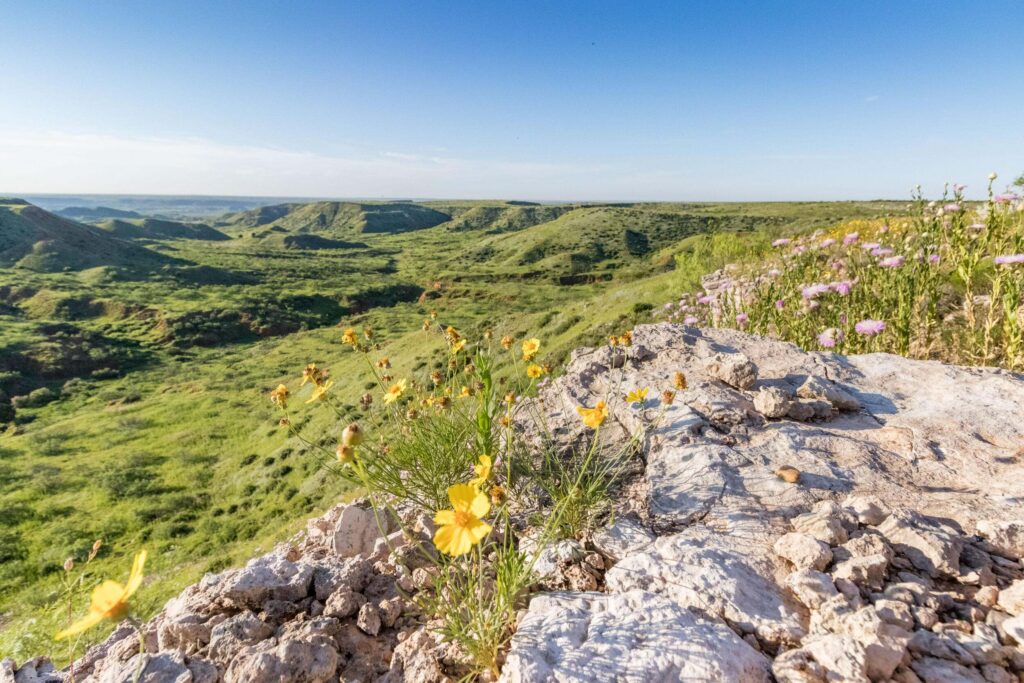
Grassland Conservation in Texas
Grassland conservation is a practical, cost-effective way to protect Texas’s water supplies, support rural economies, and reduce flood damage while keeping land in productive agricultural use. Texas’s grasslands already provide essential services by filtering water, supporting grazing and pollination, absorbing floodwater, and sustaining an outdoor recreation industry worth billions of dollars a year. The largest opportunity to protect these benefits lies on the 95% of Texas land that is privately owned, where voluntary conservation easements and incentive programs can keep grasslands intact without new land-use mandates. Scaling conservation now is time-sensitive, as continued fragmentation and conversion of grasslands increases future costs for water treatment and flood recovery while accelerating declines in grassland wildlife. Grassland conservation is not an abstract environmental goal, it is a proven investment in Texas’s water, agriculture, and long-term resilience.
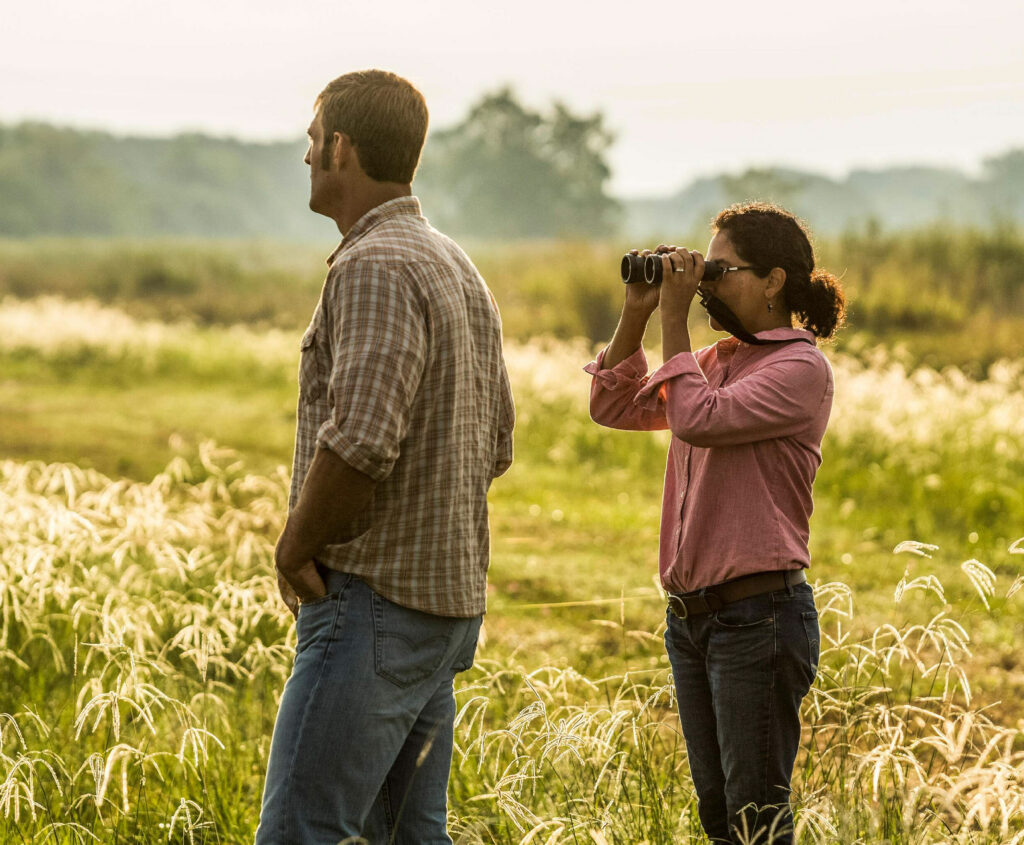
What difference does grassland conservation make for communities in Texas?
Grassland conservation supports ranching, recreation, and rural jobs

Texas conservation lands, covering more than 1.6 million acres, save taxpayers more than $1 billion every year through water protection, flood prevention, and rural economic benefits. Over 30 years, that adds up to more than $30 billion in savings.1

Conserved grasslands help keep farms and ranches productive by supporting grazing, pollination, and natural pest control. In Texas, conservation lands generate about $150 million in annual savings for agriculture, ranching, and timber.1

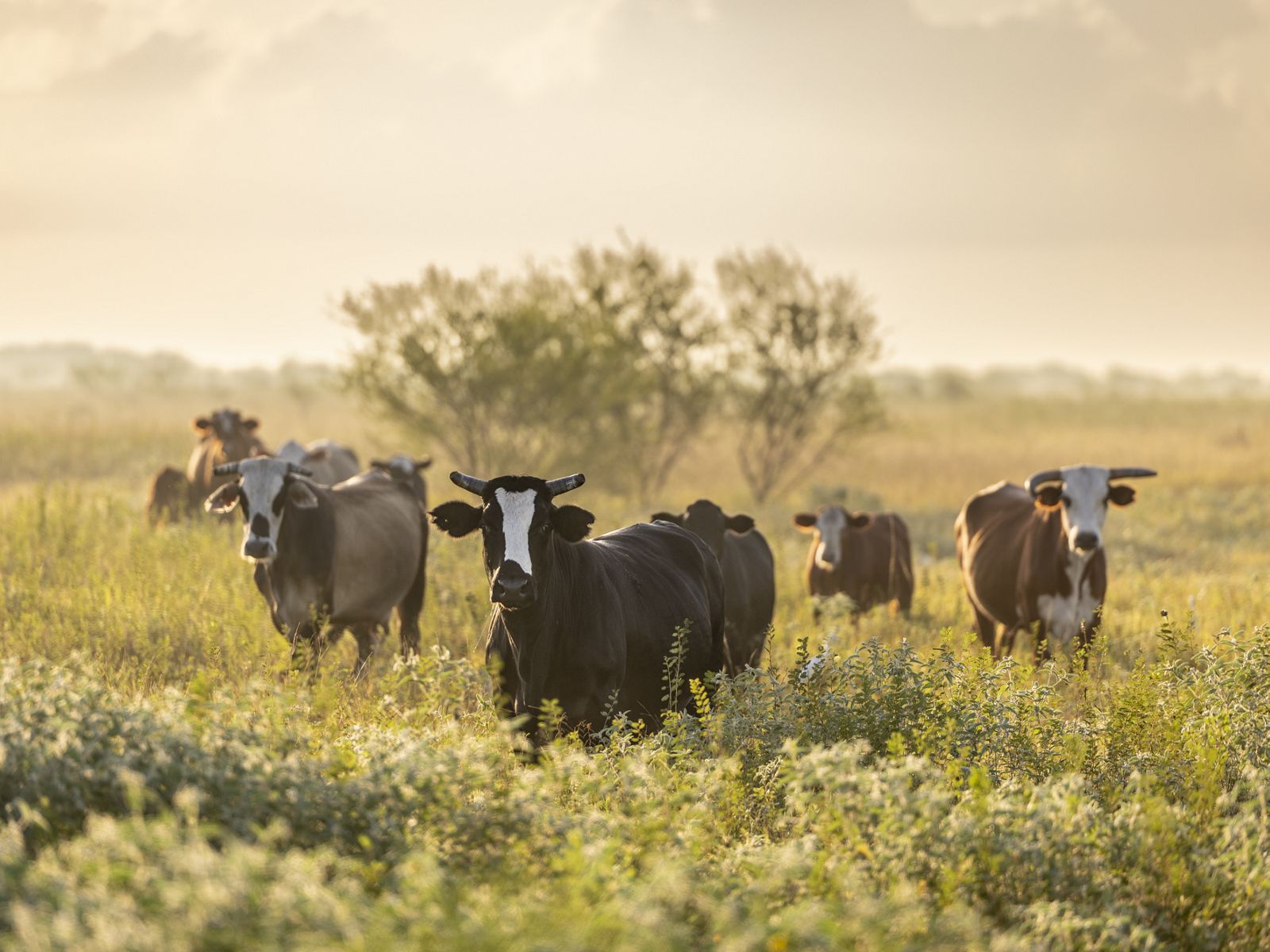
Healthy grasslands are essential ecosystems for productive ranching and grazing. Texas has the highest number of farms and ranches of all U.S. states2 and rangelands cover 59% of the state,3 contributing to more than $32 billion in annual agricultural sales.2

Grassland conservation supports outdoor recreation like hunting, birding, and hiking, which drives tourism spending. In Texas, the outdoor recreation industry generates $37.5 billion annually, accounting for over 314,000 jobs and $15.5 billion in wages and salaries.4

Grasslands act as natural sponges absorbing floodwater and reducing runoff. Studies estimate Texas conservation lands avoid about $484.2 million in flood damage each year.1
Grasslands filter water and reduce runoff

Texas conservation lands provide major water benefits, including $315.9 million each year in water supply savings and $69.3 million in water quality benefits by reducing the cost of storing, securing, and filtering water.1

In the Trinity River watershed, which supplies water to more than half of Texans,15 prairies and savannas help keep streams flowing and aquifers replenished. Restoration work by the U.S. Forest Service at Lyndon B. Johnson National Grassland is expected to add nearly 14 million gallons of water a year by removing invasive trees and restoring native grasses.5

Grasslands have deep, complex root systems that help hold water in the ground and keep nutrients on the land instead of washing away. In La Salle County, a study found native grasslands produced the least surface runoff compared with four other ecosystems.6

Prairies also reduce flooding. A study by the Harris County Flood Control District found that one acre of prairie can absorb 3.5 inches of rainfall during a 100-year flood event, helping slow runoff and reduce flooding downstream.14
Grasslands sustain pollinators, birds, and wildlife

Healthy grasslands support pollinators that improve crop yields and ranchland productivity. In a South Texas study, cotton fields near native prairie habitat produced up to 18% heavier cotton bolls because of native insect pollination.7

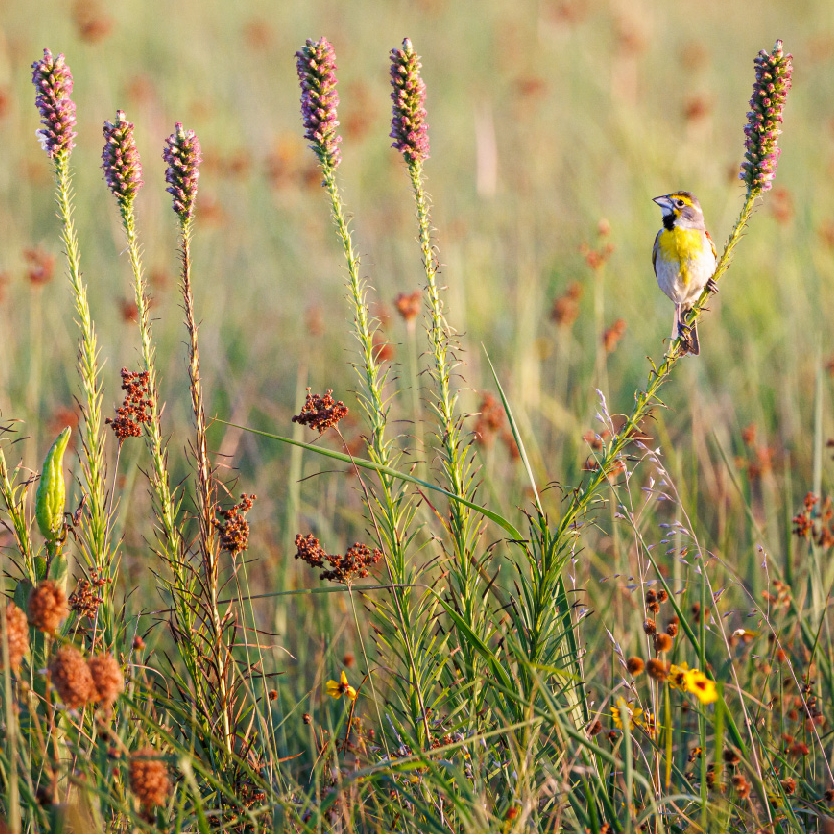
Grassland birds are among the fastest-declining bird groups in North America, with populations down more than 50% since 1970. But habitat restoration works: in a La Salle County grassland restoration project, bird abundance tripled within a few years compared to an unrestored site.8, 9

Restoring degraded grasslands helps bring back pollinators. An analysis of 25 restoration projects found pollinator abundance and species diversity recovered to levels close to those of native prairies.10

In South Texas, restoring native grasslands increased plant diversity by nearly 60%, which helped boost wildlife populations, including grassland birds and butterflies.9
Native grasslands store carbon in their soils

Intact grassland soils are major carbon sinks. Tallgrass prairies lose 50-60% of their soil carbon after repeated cultivation. Grassland restoration can recover some of the carbon, but it is predicted to take ~100 years to get to 50% of native levels and ~450 years to reach pre-cultivation levels.11

Loss of soil carbon is prevalent across various Texas grassland ecosystems. In a study of Central Texas grasslands, cultivated croplands had up to 40–60% less carbon in surface soils compared to native grasslands.12 In the Southern High Plains, native grasslands held 34 Mg of soil carbon per hectare, versus 23 Mg in cultivated fields, evidence of significant carbon loss after cultivation.13
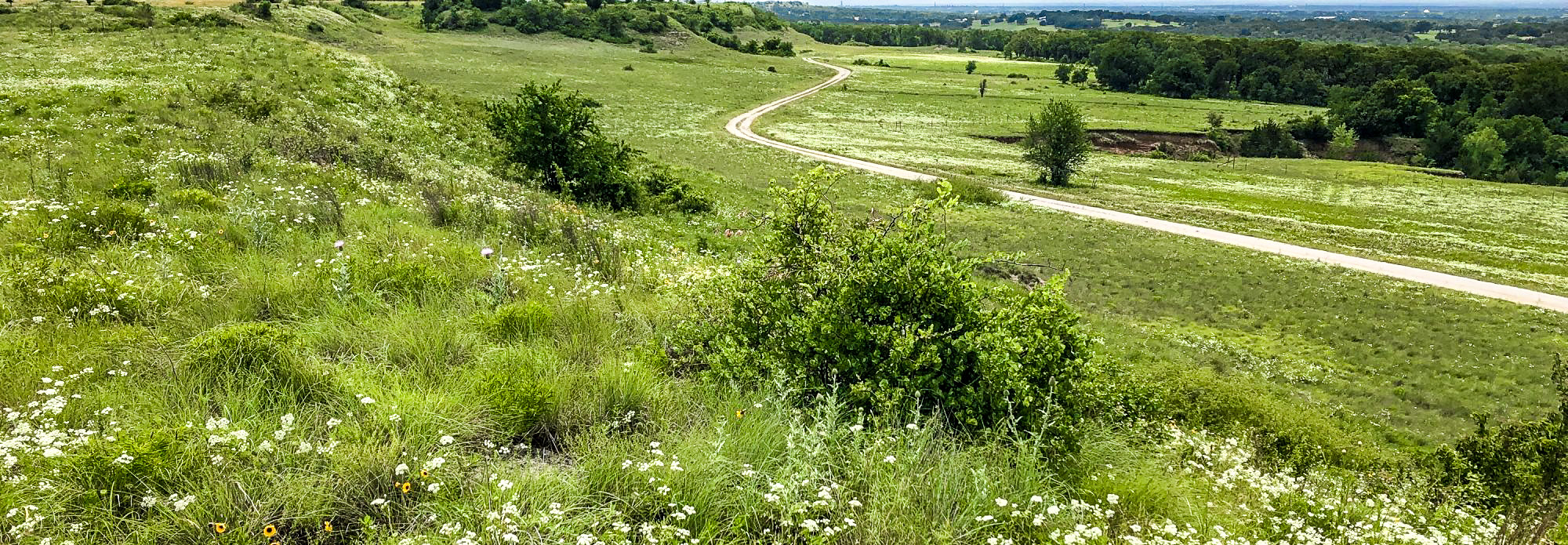


Most Americans support grassland conservation, especially once they understand it
A 2026 national survey found that the share of Americans ranking grasslands among the three most important ecosystems more than doubled (from 31% to 68%) after learning what they do, and 71% of informed respondents said they are likely to support grassland conservation.18
47% of respondents think the future of grasslands directly affects them personally, and 58% believe their actions can make a difference in protecting grasslands.18
Source: Survey of 2,014 U.S. respondents conducted April 16–28, 2026 by independent research consultancy GlobeScan. Commissioned by the America’s Grasslands Coalition.
How grassland conservation can be supported and scaled in Texas:

A dedicated state funding source could expand conservation easements and public access to nature.
Approximately 95% of Texas land is privately owned and less than 4% of state land is under any formal conservation protection.4 Texas is one of 11 states, and the only state among the 10 most populous, without a dedicated funding source for private land conservation.21 More funding to scale and support a statewide conservation fund would help expand conservation easements in grasslands and other ecosystems, as well as expand access to nature given that Texas ranks 37th in the nation for state park area per capita.19

Additional TFRLCP funding could protect ranchlands and prairies before subdivision.
The Texas Farm and Ranch Lands Conservation Program (TFRLCP) was created to fund voluntary conservation easements on private ranches, however annual funding has been relatively small, receiving $2 million every biennium.20 More TFRLCP funding could purchase development rights on high-value ranchlands and prairies before subdivision, while allowing land to remain farms, ranches, and wildlife habitat. This responds to the documented loss of working lands and the fact that 60% of TFRLCP applications were unfunded between 2016 and 202420 despite the program yielding a 23-to-1 return where $23 worth of land value is protected for every $1 of program investment.20

Expanded incentive programs like GRIP could support prescribed fire, native grass reseeding, and regenerative grazing.
With more funding, Texas could strengthen incentive programs that encourage sustainable management of grasslands, such as the Grassland Restoration Incentive Program (GRIP), which offers 50% cost-sharing to landowners for practices like prescribed fire and native grass reseeding to improve habitat for grassland birds.22 This includes expanding cost-share and grant programs for habitat restoration, prescribed burning, invasive brush control, and regenerative grazing. Increased funding could broaden such programs to more counties and raise cost-share rates, boosting landowner participation.

Funding for transaction costs and stewardship endowments could help land trusts conserve more private land.
Texas land trusts have conserved more than 2 million acres of private land, but a Land Trust Alliance assessment found that landowners often cannot afford to donate easements, especially when development value is high and rising.21 More funding could pay for transaction costs, stewardship endowments, and partial purchase of development rights to help landowners.

State match funding could leverage federal, philanthropic, and private investment.
State dollars can unlock federal, philanthropic, and private money. Texas Farm and Ranch Lands Conservation Program reported a 9-to-1 leverage of external funds in its 2024 report.20 Dedicated state match funding would make Texas projects more competitive for Agricultural Conservation Easement Program (ACEP) and Regional Conservation Partnership Program (RCPP) initiatives.
Click for References
1. Texas Land Trust Council. (2019). Valuing economic benefits of Texas conservation lands (Prepared by Siglo Group). https://www.hillcountryconservancy.org/wp-content/uploads/2019/03/2019-02_TLTC_Economic-benefits-of-land-conservation_FULL-REPORT_Siglo-2.pdf
2. Texas Department of Agriculture. (n.d.). Texas ag stats. Retrieved April 2026, from https://texasagriculture.gov/About/Texas-Ag-Stats
3. Rangelands Gateway. (n.d.). Texas. Retrieved April 2026, from https://rangelandsgateway.org/states/texas
4. Lund, A., Smith, A., & Lopez, R. (2023). Conserving Texas: Quantifying ecological return on investment (Research Report No. 2023-1). Texas A&M Natural Resources Institute. https://nri.tamu.edu/media/3672/conserving-texas_quantifying-ecological-return-on-investment.pdf
5. National Forest Foundation. (n.d.). Building watershed resiliency in North Texas. Retrieved April 2026, from https://www.nationalforests.org/impact_story/building-watershed-resiliency-in-north-texas/
6. Lampman, J., Cordts, K., Cobb, F., Van Allen, M., Fox, W., Tolleson, D., Osei, E., & Lopez, R. (2024). Quantifying holistic benefits of native vegetation restoration. Texas A&M Natural Resources Institute. https://nri.tamu.edu/media/3987/quantifying-holistic-benefits-of-native-vegetation-restoration.pdf
7. Cusser, S., Neff, J. L., & Jha, S. (2016). Natural land cover drives pollinator abundance and richness, leading to reductions in pollen limitation in cotton agroecosystems. Agriculture, Ecosystems & Environment, 226, 33–42. https://doi.org/10.1016/j.agee.2016.04.020
8. Rosenberg, K. V., Dokter, A. M., Blancher, P. J., Sauer, J. R., Smith, A. C., Smith, P. A., Stanton, J. C., Panjabi, A., Helft, L., Parr, M., & Marra, P. P. (2019). Decline of the North American avifauna. Science, 366(6461), 120–124. https://doi.org/10.1126/science.aaw1313
9. Gowdy, G., Hernández, F., Fulbright, T., Grahmann, E., Wester, D., Vreugdenhil, E., Henehan, A., Smith, F., & Hehman, M. (2022). Plant, avian, and butterfly response to a native-grassland restoration in Southern Texas. Ecological Restoration, 40(1), 44–52. https://er.uwpress.org/content/40/1/44
10. Sexton, A. N., & Emery, S. M. (2020). Grassland restorations improve pollinator communities: A meta-analysis. Journal of Insect Conservation, 24, 719–726. https://doi.org/10.1007/s10841-020-00247-x
11. Matamala, R., Jastrow, J. D., Miller, R. M., & Garten, C. T. (2008). Temporal changes in the distribution of C and N stocks in a restored tallgrass prairie in the U.S. Midwest. Ecological Applications, 18(6), 1470–1488. https://doi.org/10.1890/07-1609.1
12. Potter, K. N., & Derner, J. D. (2006). Soil carbon pools in central Texas: Prairies, restored grasslands, and croplands. Journal of Soil and Water Conservation, 61(3), 124–128. https://doi.org/10.1080/00224561.2006.12435871
13. Bronson, K. F., Zobeck, T. M., Chua, T. T., Acosta-Martinez, V., van Pelt, R. S., & Booker, J. D. (2004). Carbon and nitrogen pools of Southern High Plains cropland and grassland soils. Soil Science Society of America Journal, 68(5), 1695–1704. https://doi.org/10.2136/sssaj2004.1695
14. Harris County Flood Control District. (2015). Cypress Creek overflow management plan: Final study report (Texas Water Development Board Contract Report No. 1248321466). https://www.hcfcd.org/Portals/62/Watershed/Cy-Creek/cypresscreekoverflowreport_fin2.pdf
15. Collins, N., Reeve, T., Nefflen, T., & McCaulou, S. (2025, August 18). How revitalizing the American prairie can secure clean water. World Resources Institute. https://www.wri.org/insights/revitalizing-lbj-national-grassland
16. The Nature Conservancy. (n.d.). Where legacy meets land: A prairie protected for generations. Retrieved July 6, 2026, from https://www.nature.org/en-us/about-us/where-we-work/united-states/texas/stories-in-texas/oconnor-ranch-easement/
17. The Nature Conservancy. (n.d.). Smiley Meadow Preserve. Retrieved July 6, 2026, from https://www.nature.org/en-us/get-involved/how-to-help/places-we-protect/smiley-meadow-preserve/
18. GlobeScan. (2026, June 18). Half of Americans have little to no knowledge of grasslands, the country’s largest natural habitat. https://globescan.com/2026/06/18/half-of-americans-have-little-to-no-knowledge-of-grasslands-the-countrys-largest-natural-habitat/
19. Billingsley, S., & Metzger, L. (2022, August 19). A most valuable legacy: Investing in the next 100 years for Texas’ state parks system. Environment Texas Research & Policy Center. https://environmentamerica.org/texas/center/resources/a-most-valuable-legacy/
20. Lund, A. A., Smith, L. A., & Lopez, R. R. (2024). Texas Farm and Ranch Lands Conservation Program: 2024 evaluation report (Research Report No. 2024-1). Texas A&M Natural Resources Institute. https://nri.tamu.edu/publications/research-reports/2024/texas-farm-and-ranch-lands-conservation-program-2024-evaluation-report/
21. Land Trust Alliance. (2025). Advancing capacity for land & water conservation in Texas: A capacity needs assessment to accelerate the pace, scale, equity and impact of conservation in Texas for the coming decade. https://a.storyblok.com/f/120093/x/68eac302b9/2025_lta_texas_v8_2-23-2026.pdf
22. Texas Grasslands and Savannas Initiative. (n.d.). Additional financial resources. Retrieved July 6, 2026, from https://www.prairiepartner.org/other-funding-sources

Build your own case for grassland conservation in Texas
Choose the facts that matter most to your audience and generate a custom one-page fact sheet, whether you’re talking to landowners, water providers, community leaders, or funders.


Learn More
Contact experts on grassland conservation:
Below is a list of organizations that specialize in reforestation within our coalition. Send us an email and we’ll direct you to the correct person to communicate with.
Explore our “Science for Decision-Makers” page
The “Science for Decision-Makers” section highlights key research on nature-based solutions in the U.S., including strategies like grassland conservation complemented by blog articles, case studies, videos, and infographics that summarizes the research and explain the impact it can have on real-world situations.
What is the science?
See the climate mitigation potential of grassland strategies in our Science page.
What else can be done?