



Reforestation in Alabama
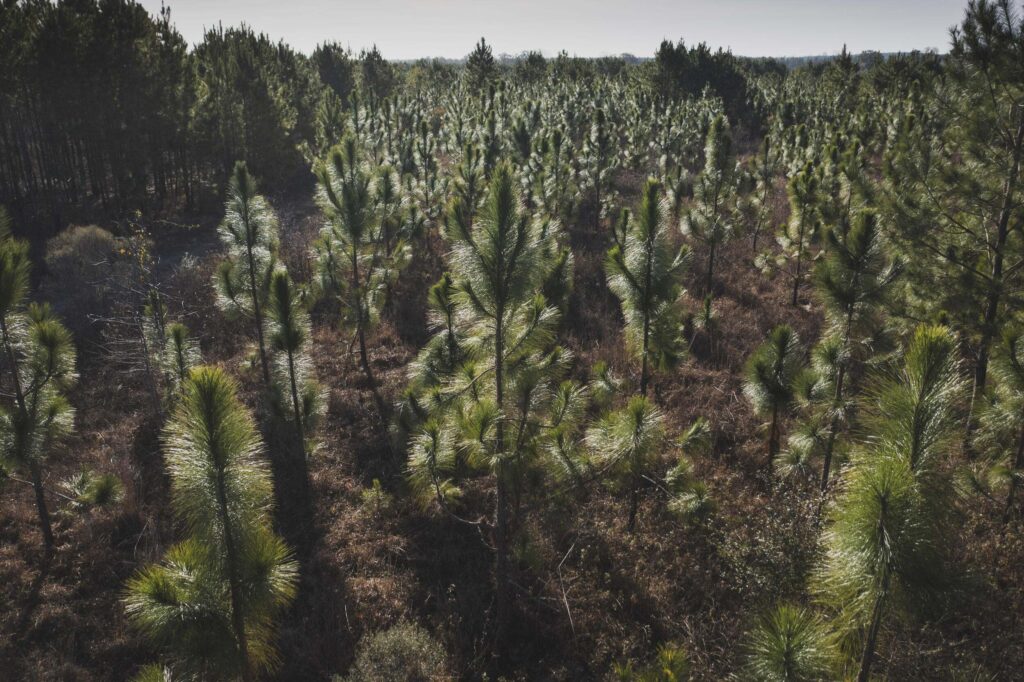
Alabama’s forests are a cornerstone of the state’s economy, rural communities, and natural resources, and they face growing pressure. In 2024, Alabama experienced the most southern pine beetle mortality in state history, with 3.1 million pine trees killed across 67 counties, creating an urgent need for reforestation on private lands that supply the state’s $36.3 billion forest industry.1 Reforestation, planting trees on lands that were historically forested, helps keep working lands productive, supports private landowners, and protects water quality and communities. Proven, voluntary programs already operating in Alabama show that when landowners have the right support, reforestation delivers real economic and public benefits.
What difference does reforestation make for communities in Alabama?
Reforestation boosts local economies and creates jobs

Alabama’s forest industry contributed $36.3 billion to the state’s overall economy in 2023, up from $28.9 billion in 2019, and directly employs more than 54,000 Alabamians across logging, trucking, mills, and allied sectors.1

Alabama ranks 2nd nationally in roundwood usage and pulp production, and 3rd in lumber, making its forest resource one of the most economically significant in the country.1

Alabama’s 139,863 private forest landowners manage 16.5 million acres of forestland,2 the private lands that supply the mills and export markets underpinning the state’s $36.3 billion forest industry.1

Trees take 25 to 40 years to reach harvestable size, meaning reforestation decisions made today determine Alabama’s timber supply for future decades. Alabama forest products businesses exported over $980 million in paper products and $425 million in wood products in 2024 alone, long-term market commitments that depend on a sustained future wood supply from private lands.1

Despite a slower year due to elevated interest rates, the Alabama Forestry Commission (AFC) reported 16 new or expanding forest-industry projects in 2024 totaling 333 jobs and $172 million in capital investment, part of a decade-long trend of forest industry growth in Alabama.1

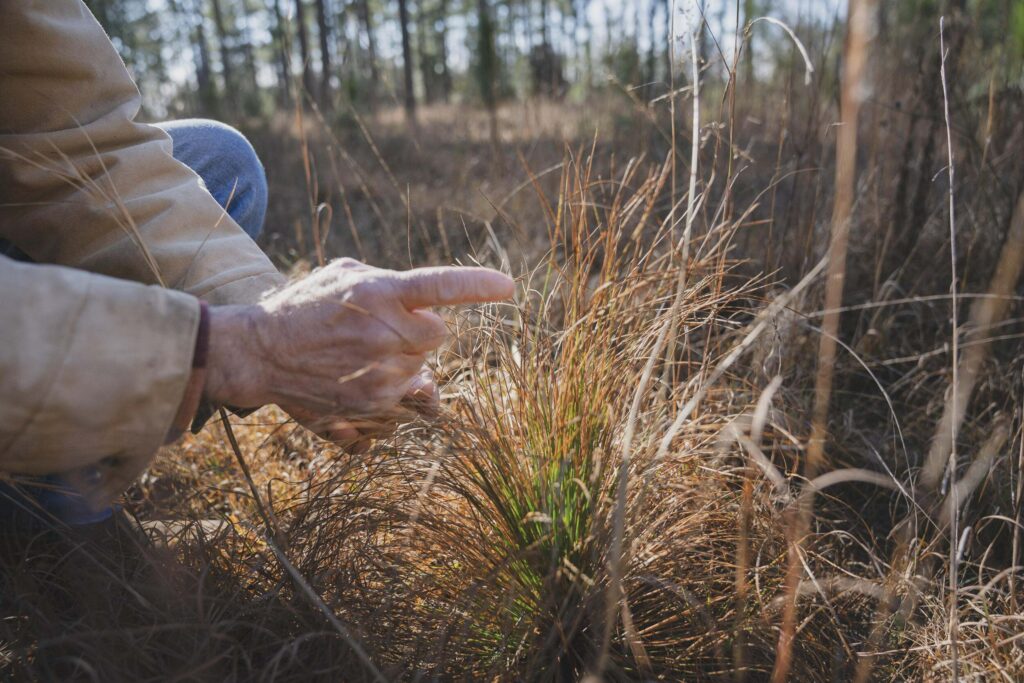
Longleaf pine, a high-value native species, offers Alabama landowners multiple income streams: timber, pine straw, and access to federal cost-share programs, including USDA’s EQIP and CRP, that substantially offset establishment costs. The AFC and USDA’s Natural Resources Conservation Service (NRCS) provide direct financial and technical assistance for longleaf establishment and prescribed burning across the state.3, 4, 5
Forests (and reforestation) help filter water and reduce pollution

Alabama residents get more than half their public drinking water from private forests, and 60% of the state’s surface water flows through privately owned forestland before reaching treatment systems.6 When those forests are healthy, the water is cleaner and cheaper to treat, and the evidence from Alabama’s own watersheds shows what reforestation delivers.

Between 2005 and 2009, 1,372 acres of riparian forest buffers were planted along Crowdabout Creek in northern Alabama. EPA modeling estimates these buffers prevent approximately 3,035 pounds of nitrogen, 3,537 pounds of phosphorus, and 344 tons of sediment from reaching Alabama waterways each year, confirmed when the creek was removed from Alabama’s list of impaired waters in 2014.7 Alabama’s 2024 official list of waterbodies failing water quality standards documents ongoing impairment across river basins statewide, with agriculture and pasture grazing among the identified sources.8

A USDA Forest Service study of 1,746 southeastern US drinking water intakes, including Alabama, found that increasing upstream forest cover significantly reduces nitrogen, phosphorus, and sediment concentrations at downstream treatment facilities, with measurably lower nutrient levels for every 1% increase in upstream forest cover.9

Research shows that for every 10% more forest cover in a drinking water watershed, treatment and chemical costs drop by approximately 20%.10 Southern watersheds currently have about 50% forest cover on average,9 putting many Alabama communities in the range where reforestation would directly reduce what utilities spend to clean the water, and what ratepayers pay for it.

A peer-reviewed modeling study found that reforesting marginal cropland with low-infiltration soils (soils where water runs off the surface rather than soaking in) can reduce total nitrogen runoff by 95–97% and phosphorus by 96–99%, virtually eliminating fertilizer pollution from those lands. These results reflect high-priority conversion sites; actual reductions depend on local soils, slopes, and precipitation.11
Reforestation supports Alabama’s extraordinary biodiversity, and the communities that depend on it

Longleaf pine ecosystems support 28 threatened and endangered species, including the gopher tortoise, red-cockaded woodpecker, and Louisiana pine snake, that depend on the open, fire-maintained habitat longleaf forests provide.4, 13 Restoring longleaf on private lands restores the forest structure that supports the entire web of life these species anchor, including game species like wild turkey, bobwhite quail, and white-tailed deer that are central to Alabama’s hunting economy and rural identity.13

Alabama ranks #1 nationally for freshwater mussel, fish, snail, crayfish, and turtle diversity and first among all states east of the Mississippi River in total species diversity.14 Freshwater mussels are biological indicators: their presence means water is clean; their decline is a warning that water quality is deteriorating. Of Alabama’s 180+ native mussel species, 58 are currently threatened or endangered, a decline tied to degraded water quality across thousands of miles of Alabama rivers.15 Reforestation of upland and riparian areas is among the most direct tools available for restoring the water quality these species, and communities, require.

Hunting, fishing, and wildlife recreation generate $15 billion annually for Alabama’s economy and support 135,000 jobs, according to the Alabama Department of Conservation and Natural Resources.16 In the Black Belt alone, hunting and fishing generates $1.7 billion in annual economic impact, built on the forests, wetlands, and healthy waterways that define the region.17 This economy depends on the same forest cover and clean water that reforestation maintains, connecting biodiversity, water quality, and rural economic opportunity in a single investment.
Forests help naturally remove and store carbon

There are up to 7 million acres of opportunity in Alabama to restore forest cover for climate mitigation. Reforesting these areas could capture 17 million tonnes of CO2 per year, equivalent to removing 3.7 million cars from the road every year. 98.6% of this opportunity is on privately owned land, making voluntary landowner programs the essential pathway to realizing it at scale.18


Americans overwhelmingly support practices that expand forest restoration
90% of voters nationwide (85% GOP, 92% IND, 95% DEM) support “providing technical assistance and education to farmers and forest owners so they can learn how to incorporate climate-smart practices on their land.”19
87% of voters nationwide (80% GOP, 88% IND, 93% DEM) support “providing financial incentives and programs for private forest and woodland landowners to sustainably manage their land to keep forests healthy and adopt practices that naturally remove carbon from the air.”19
Source: Survey of 1000 registered voters conducted in June 2024 by bipartisan research team New Bridge Strategy (R) and FM3 Research (D). Commissioned by U.S. Nature4Climate.
How Reforestation Can Be Supported and Expanded in Alabama

Expand landowner cost-share for reforestation on private and marginal agricultural land
Alabama Forestry Commission (AFC)-administered cost-share programs, including Environmental Quality Incentives Program (EQIP) and Conservation Reserve Program (CRP), already provide a proven delivery system for voluntary reforestation on private land. In FY2024, fewer than 32,000 acres received new or revised forest stewardship plans out of 16.5 million acres of privately held forestland,2 less than 0.2% of the opportunity. Expanding cost-share availability and awareness would connect more willing landowners to programs that already exist.3, 12

Increase technical assistance capacity
AFC foresters, NRCS staff, Extension specialists, and consulting foresters together form the technical assistance backbone that helps Alabama landowners move from interest to action, developing management plans, providing silvicultural recommendations, and connecting landowners to cost-share resources. Alabama’s Forest Action Plan identifies the capacity to engage landowners and stakeholders as one of seven threats to the state’s forest resource, signaling the need to sustain and strengthen this technical assistance network.12

Invest in reforestation workforce and supply chain capacity
Removing supply-chain bottlenecks, including planting crews, forestry contractors, and landowner outreach, is necessary to translate available funding into acres planted. Workforce development for the logging and planting sectors remains a documented need in Alabama.12
Fund riparian buffer planting along priority stream corridors
Riparian forest buffers deliver water quality protection, flood risk reduction, and wildlife habitat in a single investment, and CRP’s Riparian Forest Buffer program already provides a federal cost-share mechanism for this work in Alabama. Targeted investment in riparian reforestation in watersheds with documented water quality impairment would build directly on the outcomes demonstrated at Crowdabout Creek.3, 7, 8

Expand pest-risk and forest health prevention programs
The most beetle mortality in Alabama’s recorded history occurred in 2024, with 3.1 million pine trees killed across 67 counties.1 Funding for thinning and stand improvement practices that reduce southern pine beetle risk protects both existing forests and reforestation investments over time.

Support longleaf pine restoration beyond planting
Successful longleaf restoration requires prescribed fire, cogongrass and invasive species control, and multi-year follow-up management, not just initial planting. Cogongrass in particular threatens longleaf restoration success across south-central Alabama.3,4

Restore native forest cover in Alabama’s southwestern biodiversity corridor
Alabama’s southwestern counties — Clarke, Washington, Choctaw, Wilcox, and Barbour — rank among the state’s top ten for biodiversity corridor reforestation opportunity.18 These counties contain shrub, grassland, and degraded forest sites where native bottomland hardwood restoration would strengthen wildlife corridors, restore floodplain function, and improve water quality flowing to the Gulf. Federal programs already fund this work in Alabama; expanded technical assistance would extend their reach to more landowners.20

Click for References
1. Alabama Forestry Commission. (2024). Forest resource report 2024. https://forestry.alabama.gov/Pages/Management/Forms/Forest_Resource_Report_2024.pdf
2. U.S. Department of Agriculture, Forest Service. (2025). State and private forestry fact sheet: Alabama 2025. https://apps.fs.usda.gov/nicportal/temppdf/sfs/naweb/AL_std.pdf
3. Alabama Forestry Commission. (n.d.). Cost share assistance programs. https://www.forestry.alabama.gov/Pages/Management/CostShare.aspx
4. U.S. Department of Agriculture, Natural Resources Conservation Service. (n.d.). Longleaf Pine Initiative: Alabama. https://www.nrcs.usda.gov/programs-initiatives/longleaf-pine-initiative/alabama/longleaf-pine-initiative-alabama
5. Alabama Forestry Foundation. (n.d.). Longleaf. https://alabamaforestryfoundation.org/longleaf
6. Alabama Forestry Commission. (n.d.). Alabama forest facts [Fact sheet]. https://www.forestry.alabama.gov/Pages/Education/PDFs/ForestFacts.pdf
7. U.S. Environmental Protection Agency. (2017). Nonpoint source success story: Adding riparian buffers decreases pollutant loading, increases dissolved oxygen, and improves habitat in Crowdabout Creek (EPA 841-F-17-001Q). https://www.epa.gov/sites/default/files/2017-09/documents/al_crowdaboutcreek_1574_508.pdf
8. Alabama Department of Environmental Management. (2024). Final 2024 303(d) list of impaired waters in Alabama. https://adem.alabama.gov/programs/water/wquality/2024AL303dList.pdf
9. Caldwell, P., Muldoon, C., Miniat, C. F., Cohen, E., Krieger, S., Sun, G., McNulty, S., & Bolstad, P. V. (2023). Forested watersheds provide the highest water quality among all land cover types. Science of the Total Environment, 882, 163550. https://www.srs.fs.usda.gov/pubs/ja/2023/ja_2023_caldwell_005.pdf
10. Barten, P. K., & Ernst, C. E. (2004). Land conservation and watershed management for source protection. Journal AWWA, 96(4), 121–135. https://doi.org/10.1002/j.1551-8833.2004.tb10603.x
11. Keller, A. A., & Fox, J. (2019). Giving credit to reforestation for water quality benefits. PLOS ONE, 14(6), e0217756. https://doi.org/10.1371/journal.pone.0217756
12. Alabama Forestry Commission. (2020). Alabama’s forest road map 2020: Forest action plan. https://www.forestry.alabama.gov/Pages/Management/Forest_Action_Plan.aspx
13. U.S. Department of Agriculture, Natural Resources Conservation Service. (n.d.). Working lands for wildlife: Gopher tortoise. https://www.nrcs.usda.gov/programs-initiatives/working-lands-for-wildlife/gopher-tortoise
14. Duncan, R. S. (2023). Biodiversity in Alabama. Encyclopedia of Alabama. https://encyclopediaofalabama.org/article/biodiversity-in-alabama/
15. Southern Environmental Law Center. (n.d.). A freshwater powerhouse is disappearing across the South. https://www.selc.org/news/a-freshwater-powerhouse-is-disappearing-across-the-south/
16. Alabama Department of Conservation and Natural Resources. (n.d.). Alabama hunting and fishing regulations: Introduction. https://www.eregulations.com/alabama/hunting/introduction
17. Alabama News Center. (2024, May 17). Booming Alabama Black Belt tourism pumps billions of dollars into state’s economy. https://alabamanewscenter.com/2024/05/17/booming-alabama-black-belt-tourism-pumps-billions-of-dollars-into-states-economy/
18. The Nature Conservancy & American Forests. (n.d.). Reforestation Hub: Alabama. https://reforestationhub.org/map/state/alabama
19. U.S. Nature4Climate. (2024, August 7). Support for implementing natural climate solutions in the United States is strong and growing [Survey report]. https://usnature4climate.org/2024/08/07/support-for-implementing-natural-climate-solutions-in-the-united-states-is-strong-and-growing/
20. U.S. Department of Agriculture, Natural Resources Conservation Service. (n.d.). Wetland reserve easements. https://www.nrcs.usda.gov/programs-initiatives/wetland-reserve-easements

Make the case for reforestation
Customize a PDF infographic to help you make the case for why reforestation is essential to empower and protect communities in Alabama from the effects of the changing climate.


Learn More
Contact experts on reforestation:
Below is a list of organizations that specialize in reforestation within our coalition. Send us an email and we’ll direct you to the correct person to communicate with.
Explore our “Science for Decision-Makers” page
The “Science for Decision-Makers” section highlights key research on nature-based solutions in the U.S., including strategies like reforestation and improving forest management, complemented by blog articles, case studies, videos, and infographics that summarizes the research and explain the impact it can have on real-world situations.
What is the science?
See the climate mitigation potential of forest strategies in our Science page.
What else can be done?