



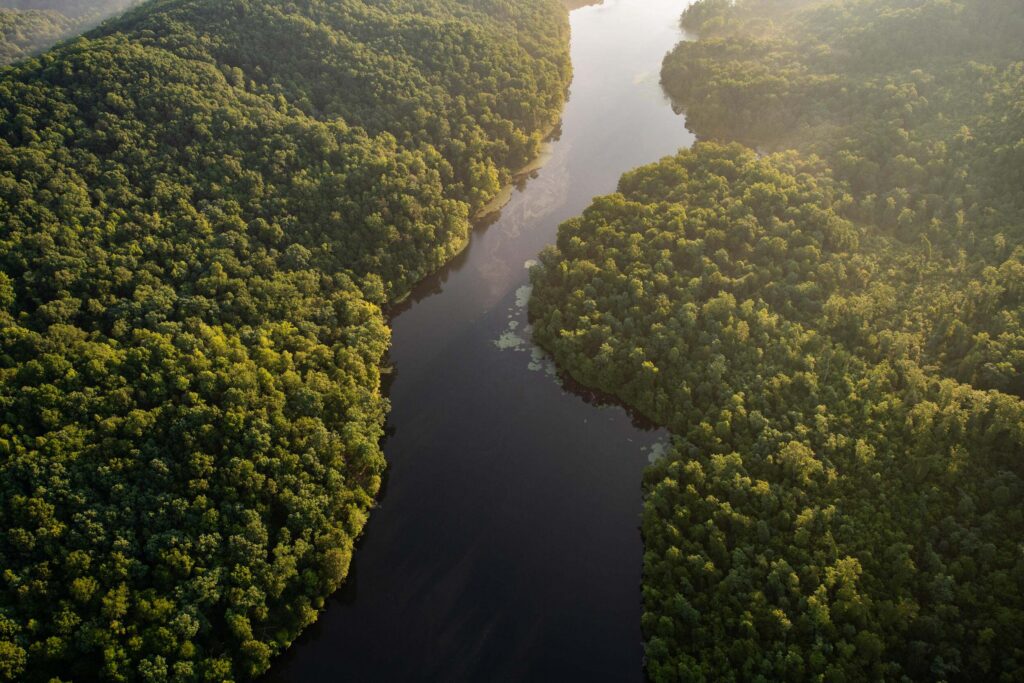
Reforestation in Kentucky
Reforestation in Kentucky is one of the Commonwealth’s clearest opportunities to strengthen rural economies, working lands, and long‑term resilience at the same time. Kentucky ranks among the top reforestation states in the nation, reinforcing the opportunity to deliver benefits at scale. Reforestation supports one of Kentucky’s most important rural industries, protects drinking water sources, and reduces public costs associated with flooding, erosion, and water treatment, while helping landowners build long‑term land value and access income through carbon and conservation incentive programs. Because nearly all reforestation opportunities occur on private land, state programs play a critical role in helping landowners establish forests that keep land productive, strengthen local economies, and deliver durable public benefits for communities across Kentucky.
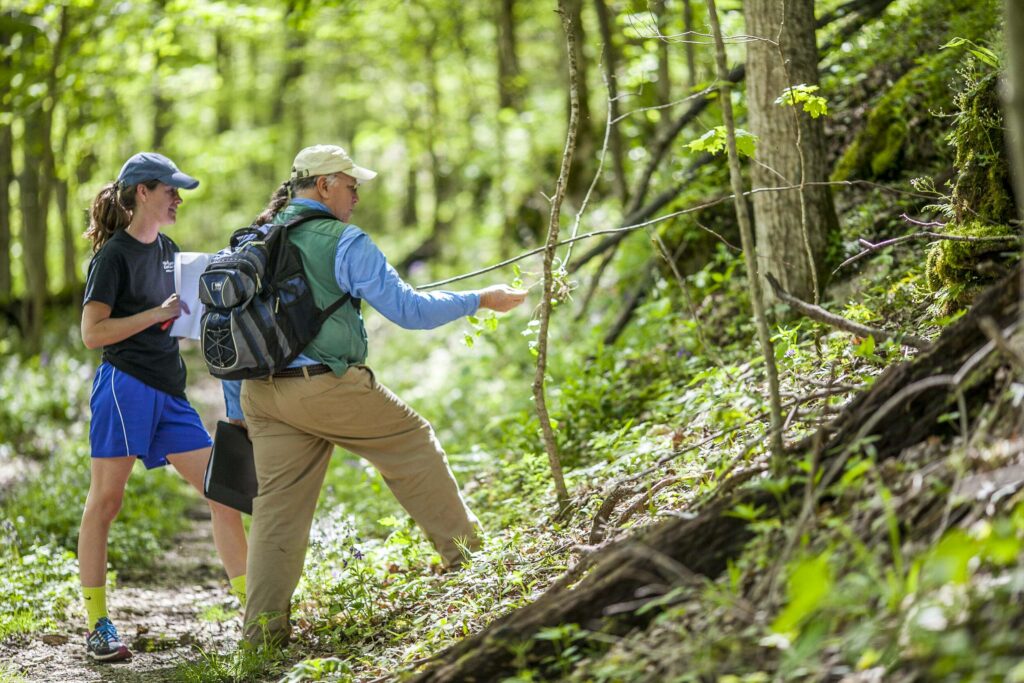
What difference does reforestation make for communities in Kentucky?
Forests are a cornerstone of Kentucky’s rural economy and support thousands of jobs

Kentucky’s forest sector contributes roughly $19 billion to the state’s economy each year, including $12.9 billion in direct contributions, and supports nearly 60,000 jobs, about 28,000 of them directly in the sector.1

Outdoor recreation contributes about $5.1 billion in value-added to Kentucky’s economy, and supports about 52,000 jobs, with forests underpinning much of the habitat, trails, and scenery that draw people outdoors.2

Hardwoods take decades to mature, so the forest base that will sustain this $19 billion economy and its jobs rests on what Kentucky reforests today. Replanting and restocking woodlands, especially slow-growing, high-value species like white oak, secures the raw-material supply the forest industry and rural communities depend on.1

Reforesting with white oak, a critical species across Kentucky’s central counties, directly supports the Commonwealth’s $10.4 billion bourbon industry, which depends on white oak barrels and a healthy native hardwood supply chain. Reforestation maintains this raw material base over the multi-decade timelines the industry requires.1, 3, 4
Forests reduce flood risk by slowing storm runoff, protecting downstream communities and infrastructure

Flooding is Kentucky’s #1 most frequent and costly natural disaster.11,32 The state contains nearly 90,000 miles of rivers and streams11 and receives 42–52 inches of average annual rainfall,28 making watershed cover a critical factor influencing flood severity.

The July 2022 eastern Kentucky floods killed 44 people and damaged or destroyed nearly 9,000 homes, drawing more than $159 million in federal disaster assistance to survivors through FEMA grants and SBA loans. Researchers noted that compacted mine land and deforestation compounded flood severity, converting extraordinary rainfall into catastrophic runoff.9, 10, 37

In Appalachia and across Kentucky, forests reduce flood risk by slowing storm runoff, increasing soil infiltration, and stabilizing streambanks. These functions lower peak flood flows and protect downstream communities. The USFS notes that forests absorb rainfall and help minimize floods, and that investing in forested watersheds is often a cost-effective alternative to building or upgrading conventional infrastructure.31

Reforestation and riparian buffers are among the nature-based solutions FEMA recognizes as a cost-effective approach to flood mitigation, and EPA credits green infrastructure and floodplain conservation with reducing flood risk more cheaply than gray infrastructure. Unlike gray infrastructure, they simultaneously deliver water quality, habitat, carbon, and economic co-benefits, which lowers the effective cost per benefit delivered.27, 38
Forests are essential infrastructure for Kentucky’s drinking water and watershed health

Kentucky gets about 95% of its drinking water from surface sources, so whatever enters rivers and streams eventually reaches water treatment systems.5 Forested watersheds deliver the highest-quality surface water of any land cover type,6 which means restoring forest cover lowers the contaminant load utilities must remove downstream.
Riparian forest buffers are among the most effective tools for keeping runoff out of streams. A USDA assessment of riparian forest buffers found they reduce nitrogen pollution by 17-56% and phosphorus by 4-20%.7 This matters in central Kentucky, where agricultural runoff is a documented driver of contamination in the region’s headwater streams, carrying herbicides and nutrients into waters that supply downstream communities.5, 8

In eastern Kentucky, surface mining stripped forest cover from hundreds of thousands of headwater acres, and the legacy shows up in the water, with the mining region carrying elevated sulfate and other pollutants from mine drainage into streams that supply downstream communities.5,35 Reforesting these mined lands begins to reverse that degradation, rebuilding the forest cover that filters runoff and stabilizes soils.22
Reforestation reconnects fragmented forests and rebuilds habitat for wildlife, pollinators, and aquatic animals

Forest loss and fragmentation are significant threats to forest health in Kentucky and contribute to the loss of biodiversity, breaking large tracts into disconnected patches, creating barriers to plant and animal movement, and opening the way for invasive species. Reforesting parts of central Kentucky would expand and reconnect interior habitat blocks, helping species move and maintain genetic diversity as the climate warms.12, 13

Central and Southern Appalachian rivers, including the Cumberland and Big Sandy systems and their Kentucky tributaries, harbor more rare and imperiled freshwater fish, mussels, and crayfish than anywhere else in North America.16 Forested headwaters and riparian corridors are essential to maintaining the water temperature, sediment levels, and stream chemistry these species require.6, 31

The Reforestation Hub identifies about 1.65 million acres of Resilient and Connected Network opportunity in Kentucky, land where reforestation would directly strengthen the biodiversity corridors that conservation science has identified as critical for species movement under a changing climate. The top counties for this opportunity are Casey, Breckinridge, Pendleton, Grayson, and Pulaski.15

Reforestation work on former mine lands in eastern Kentucky includes planting American chestnut hybrids, an effort to restore a functionally extinct species that once dominated Appalachian forests and provided critical mast for hundreds of wildlife species.33
Forests help naturally remove and store carbon

Analysis from the Reforestation Hub identifies 6.8 million acres of reforestation opportunity in Kentucky, about 98.8% on privately owned land.15

Reforesting these lands could capture approximately 14 million tons of CO₂ per year, equivalent to removing 3 million cars from the road annually.15 That figure is the full technical potential, what reforesting all 6.8 million acres would capture. Realistic near-term gains would be a fraction of it, since most of that land is working pasture unlikely to convert, but even partial uptake would build a durable and growing carbon sink for the Commonwealth.

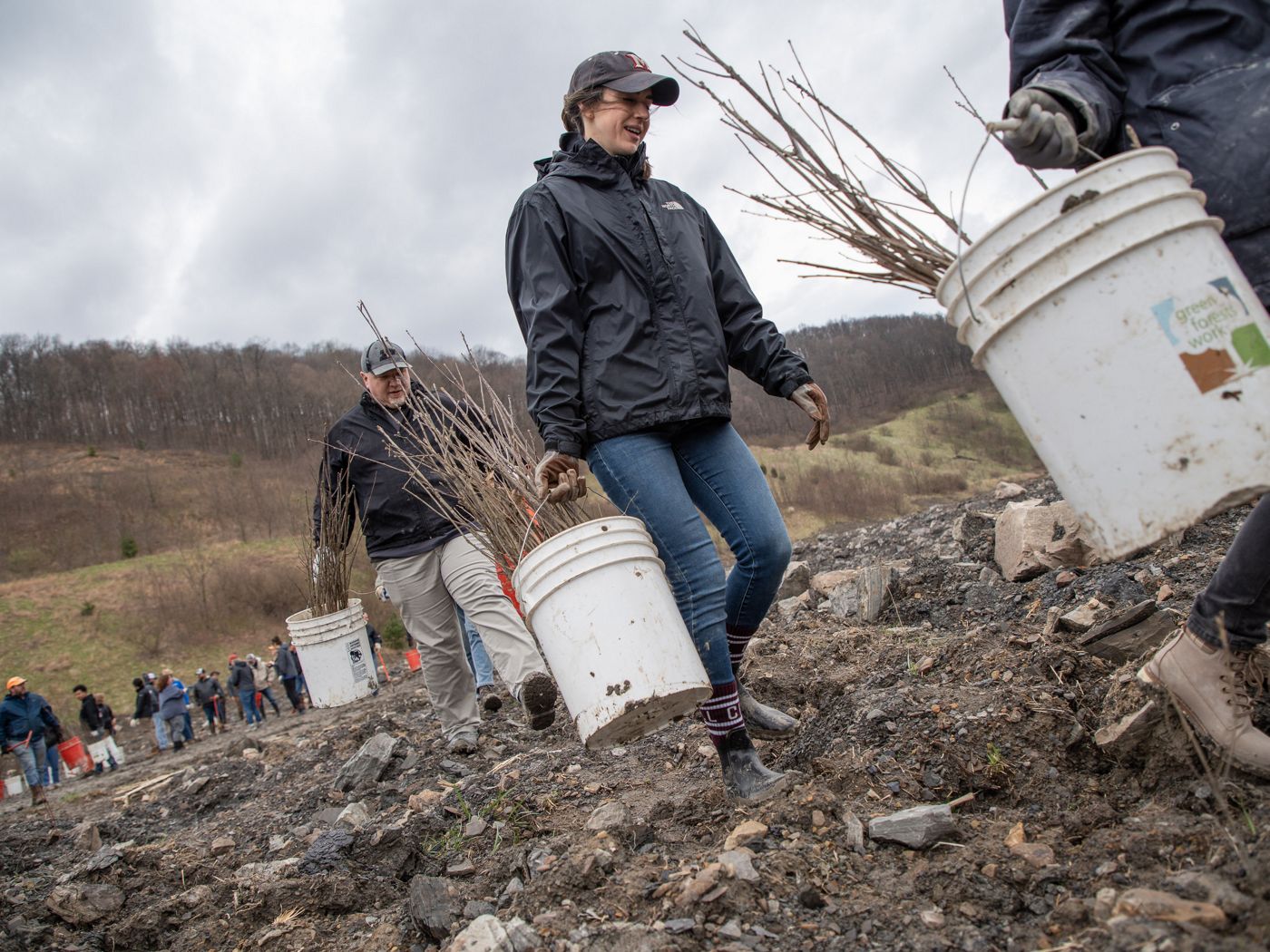
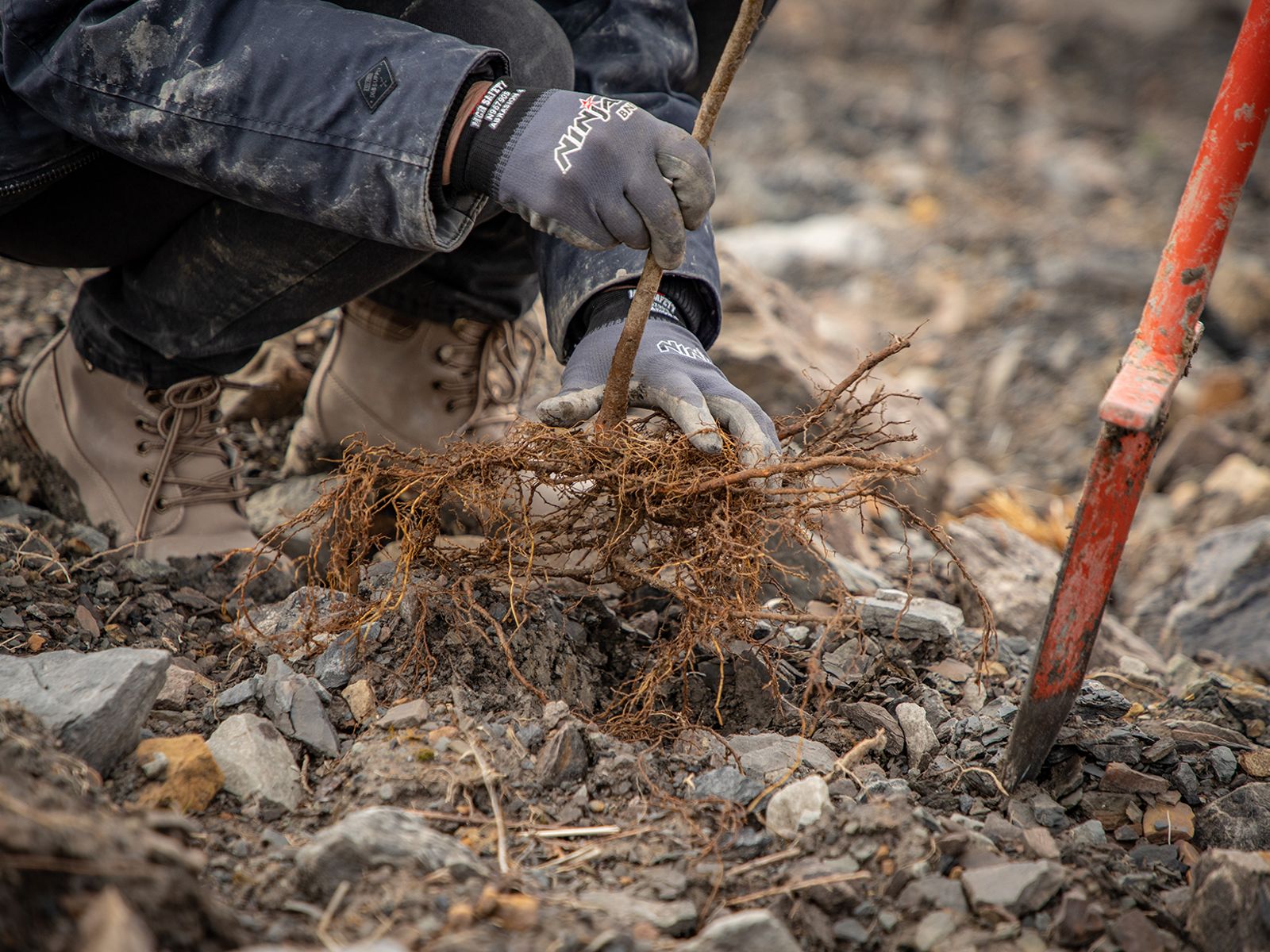


Americans overwhelmingly support practices that expand forest restoration
90% of voters nationwide (85% GOP, 92% IND, 95% DEM) support “providing technical assistance and education to farmers and forest owners so they can learn how to incorporate climate-smart practices on their land.”36
87% of voters nationwide (80% GOP, 88% IND, 93% DEM) support “providing financial incentives and programs for private forest and woodland landowners to sustainably manage their land to keep forests healthy and adopt practices that naturally remove carbon from the air.”36
Source: Survey of 1000 registered voters conducted in June 2024 by bipartisan research team New Bridge Strategy (R) and FM3 Research (D). Commissioned by U.S. Nature4Climate.
How reforestation can be supported and expanded in Kentucky:

Invest in landowner programs that create new income opportunities from voluntary reforestation on private land.
The Reforestation Hub identifies roughly 6.8 million acres of reforestation opportunity in Kentucky, about 98.8 percent of it on private land and more than 80% currently in pasture or cropland.15 Because nearly all of the potential sits in private hands, landowner-facing programs are the practical route to realizing any of it. Kentucky is a major cattle and forage state, so the realistic near-term focus is not productive farmland but the marginal, erodible, idle, and stream-adjacent acres where trees complement working operations rather than displace them, and where forest can add value to land that earns little today. For the landowners who hold this land, the barrier is usually access rather than interest: access to cost-share programs, professional forestry guidance, and markets that make planting worthwhile. Kentucky already coordinates federal Farm Bill programs such asEQIP andCRP that fund tree planting on agricultural land, and reforestation focused on high-value native species such as white oak also supports the Commonwealth’s bourbon industry, which depends on a durable hardwood supply. Added technical assistance and outreach capacity at the Kentucky Division of Forestry can help landowners, especially the smaller owners who rarely navigate federal programs on their own, take up these existing programs, draw down available federal cost-share dollars, and earn income from timber and ecosystem services, all on a voluntary basis.2,14
Fund riparian forest buffer planting along Kentucky’s central county stream corridors.
The Green River basin contains several of the state’s highest-opportunity reforestation counties, including Barren and Warren, while the Kentucky and Salt River systems run through additional high-opportunity counties such as Madison, Mercer, and Nelson.15 Planting riparian forest buffers along these corridors delivers four benefits from a single action: water-quality protection for downstream drinking-water systems, flood-risk reduction, wildlife connectivity, and reforestation of stream-adjacent land. Buffers are also among the most accessible conservation practices to fund. They qualify for continuous Conservation Reserve Program signup and the Conservation Reserve Enhancement Program, which cover much of the establishment cost and add annual rental payments, so a landowner’s net cost stays low while the public gains, measurable reductions in nitrogen and sediment loading, lower downstream flood peaks, and improved aquatic habitat, at lower cost than engineered alternatives.27, 29, 30 Because riparian land is often productive bottomland and many operations water cattle in streams, the practical focus is the highest-impact, lowest-conflict reaches: streams already documented as impaired by agricultural runoff, eroding banks, and stretches where livestock access is degrading water quality. Agricultural runoff is a documented driver of contamination in central Kentucky’s headwater streams, which makes targeted buffer planting there a high-return, verifiable investment.5, 8 This also builds on a framework already in place, since Kentucky’s Agricultural Water Quality Act recognizes riparian buffers as a best management practice and expects agricultural landowners to maintain a water-quality plan.23, 24

Fund dedicated state investment in mine land reforestation in eastern Kentucky, in coordination with federal AML and AMLER programs.
Eastern Kentucky’s approx. 800,000 acres of former surface-mine land represent a distinct reforestation opportunity, ecologically significant for forest connectivity and biodiversity and economically significant for community recovery.22, 12 Federal Abandoned Mine Land (AML) Title IV and AML Economic Revitalization (AMLER) funds already flow into eastern Kentucky for reclamation and economic revitalization, providing fully federal program dollars that Kentucky can steer toward projects that rebuild native forest cover without creating large new state grant programs.25 The persistent gap is capacity on the ground: help for communities and landowners to identify eligible sites, navigate program requirements, and sustain the outreach needed to get trees planted. Because former mine lands rarely regenerate on their own and require active intervention, removing invasive cover, ripping the compacted soil several feet deep, and hand-planting native seedlings, the binding constraint is not funding alone but the sustained, locally rooted engagement needed to identify sites and carry that work through.22, 26 Capacity for local outreach coordinators, demonstration-site visits through UK Extension, and workforce training for the soil-decompaction work the Forestry Reclamation Approach requires would directly address that constraint.22, 35

Expand native tree seedling nursery capacity to meet the scale of reforestation investment these programs would generate.
The Kentucky Division of Forestry operates two seedling nurseries, at Grassy Creek in Morgan County and Gilbertsville in Marshall County, producing roughly 1.25 million seedlings a year across more than 50 native species.39 That is a meaningful foundation, but current capacity is constrained by staffing and infrastructure, and present production would not meet the seedling demand that expanded cost-share, riparian-buffer, and mine-land reforestation efforts would create. Investment in nursery staffing, infrastructure, and seed-orchard development, particularly for high-priority species such as white oak, shortleaf pine, and native hardwoods suited to central Kentucky pasture sites, would help ensure increased planting funding can be deployed at scale. Partnerships with private nurseries for non-commercial native species could further lower per-unit costs and build regional supply-chain resilience. This is an enabling investment: without adequate seedling supply, every other effort described here is limited in how quickly it can move.

Invest in KDF forester capacity to meet the landowner assistance demand these programs would generate.
Division of Forestry foresters are the link between landowner interest and planted acres, developing management plans, coordinating cost-share enrollment, and providing technical assistance. In fiscal year 2024, the Division developed stewardship plans covering 38,458 acres, in a state with roughly 8.9 million acres of nonindustrial private forestland and more than 432,000 private forest owners. That contrast illustrates the capacity gap: every effort described in this section depends on forester availability, and without it, additional funding cannot translate into planted acres at the pace the opportunity allows.14

Build a reforestation workforce training pipeline in eastern Kentucky.
The soil‑decompaction work at the heart of the Forestry Reclamation Approach relies on heavy equipment and earth‑moving skills similar to those used in surface mining, which makes reforestation a natural workforce‑transition opportunity for the region. A training program delivered through eastern Kentucky’s community and technical college system could build the field-implementation capacity that mine-land reforestation requires while creating employment pathways for workers whose existing skills transfer directly. 22, 40

Fund invasive species control integrated with reforestation cost-share programs statewide.
Invasive species are a documented barrier to reforestation success in both Kentucky’s central pasture counties and its eastern mine lands, though the dominant species differ by geography: bush honeysuckle and multiflora rose in central Kentucky, and sericea lespedeza and autumn olive on mine sites. In both settings, invasive competition can sharply reduce seedling survival and, without treatment before and after planting, can turn a planting investment into a total loss. Integrating invasive management as a standard component of reforestation cost-share would improve per-acre outcomes and protect the larger investment in seedlings and planting. In central Kentucky, multiflora rose control also overlaps directly with established agricultural weed-management goals, so reforestation-related treatment advances objectives landowners and the farm sector already share.26, 41
Click for References
1. University of Kentucky Department of Forestry and Natural Resources. (2024). Kentucky forest sector economic contribution report 2023-2024. https://forestry.mgcafe.uky.edu/economic-report
2. The Nature Conservancy. (n.d.). Kentucky needs assessment: Economic and conservation data for Kentucky. Retrieved June 16, 2026, from https://www.nature.org/content/dam/tnc/nature/en/documents/Kentucky-Needs-Assessment-The-Nature-Conservancy.pdf
3. Kentucky Distillers’ Association. (2026). Bourbon economic impact report. https://kybourbon.com/industry/impact/
4. University of Kentucky College of Agriculture, Food and Environment. (n.d.). Kentucky forests supporting our economy. Retrieved June 16, 2026, from https://forestry.ca.uky.edu/supporting-our-economy
5. University of Kentucky. (2025, March). UK scientists reveal new insights into Kentucky’s water quality challenges. UKNow. https://uknow.uky.edu/research/uk-scientists-reveal-new-insights-kentucky-s-water-quality-challenges
6. Caldwell, P. V., et al. (2023). Forested watersheds provide the highest water quality among all land cover types. USDA Forest Service, Southern Research Station. https://www.srs.fs.usda.gov/pubs/ja/2023/ja_2023_caldwell_005.pdf
7. U.S. Department of Agriculture, Farm Service Agency. (2019). Conservation Reserve Enhancement Program riparian forest buffer: Final report. https://www.fsa.usda.gov/sites/default/files/documents/CREP-Riparian-Forest-Buffer-FINAL-REPORT.pdf
8. Jones, J., Gyawali, B. R., Acharya, S., Cristan, R., & Gebremedhin, M. (2024). Assessing the influence of agricultural nonpoint source pollution on water quality in central Kentucky’s headwater streams. Applied Sciences, 14(7), 2679. https://doi.org/10.3390/app14072679
9. NBC News. (2022). Abandoned mines and poor oversight worsened Kentucky flooding. https://www.nbcnews.com/news/amp/rcna41716
10. Federal Reserve Bank of Cleveland. (2023, September 27). Resilience and recovery: Insights from the July 2022 eastern Kentucky flood. https://www.clevelandfed.org/publications/cd-reports/2023/20230927-resilience-and-recovery
11. Kentucky Association of Mitigation Managers. (n.d.). Flood hazard overview. Retrieved May 16, 2026, from https://www.kymitigation.org/flood-hazard/
12. Kentucky Conservation Committee. (n.d.). Climate and wildlands policy recommendations. Retrieved May 16, 2026, from https://kyconservation.org/climate-wildlands
13. Kentucky Energy and Environment Cabinet. (2020). Forest loss and fragmentation (Issue 3). In Kentucky forest action plan: Statewide assessment of forest resources and strategy. https://eec.ky.gov/Natural-Resources/Forestry/forest-stewardship-program-and-landowner-services/Statewide%20Assessment%20of%20Forest%20Resources%20and%20Strat/Issue%203%20-%20Forest%20Loss%20and%20Fragmentation.pdf
14. U.S. Department of Agriculture, Forest Service. (2025). State and private forestry fact sheet: Kentucky. https://apps.fs.usda.gov/nicportal/temppdf/sfs/naweb/ky_std.pdf
15. The Nature Conservancy, & American Forests. (2025). Reforestation Hub: Kentucky state reforestation opportunity data. https://reforestationhub.org/map/state/kentucky
16. The Nature Conservancy. (n.d.). From mine lands to forests: Eastern Kentucky reforestation. Retrieved May 16, 2026, from https://www.nature.org/en-us/about-us/where-we-work/united-states/kentucky/stories-in-kentucky/eastern-kentucky-reforestation/
17. The Nature Conservancy. (2023, December). Largest conservation easement in Kentucky: Cumberland Forest Wildlife Management Area. https://www.nature.org/en-us/newsroom/kentucky-cumberland-forest-wildlife-management-area/
18. The Nature Conservancy. (n.d.). Cumberland Forest project overview. Retrieved June 16, 2026, from https://www.nature.org/en-us/what-we-do/our-priorities/protect-water-and-land/land-and-water-stories/cumberland-forest-project/
19. The Nature Conservancy. (n.d.). Kentucky’s Family Forest Carbon Program. Retrieved June 16, 2026, from https://www.nature.org/en-us/about-us/where-we-work/united-states/kentucky/stories-in-kentucky/family-forest-carbon-program/
20. American Forest Foundation. (2024). Family Forest Carbon Program expands into the South. https://www.forestfoundation.org/why-we-do-it/family-forest-blog/family-forest-carbon-program-expands-into-the-south/
21. Mountain Association. (2025). Rewilding 7,000 acres of eastern Kentucky’s mined land. https://mtassociation.org/community-development/rewilding-7000-acres-of-eastern-kentuckys-mined-land/
22. Office of Surface Mining Reclamation and Enforcement. (n.d.). Appalachian Regional Reforestation Initiative (ARRI). U.S. Department of the Interior. Retrieved June 16, 2026, from https://www.osmre.gov/programs/arri
23. Kentucky Energy and Environment Cabinet, Division of Conservation. (n.d.). Develop your agriculture water quality plan. Retrieved June 16, 2026, from https://eec.ky.gov/Natural-Resources/Conservation/Pages/AgWaterQualityPlan.aspx
24. University of Kentucky Cooperative Extension Service. (n.d.). Kentucky Agriculture Water Quality Act. Retrieved June 16, 2026, from https://water.mgcafe.uky.edu/kawqa
25. Kentucky Energy and Environment Cabinet, Division of Abandoned Mine Lands. (n.d.). AMLER program. Retrieved June 16, 2026, from https://eec.ky.gov/Natural-Resources/Mining/Abandoned-Mine-Lands/Pages/AMLER_Program.aspx
26. Green Forests Work. (n.d.). Approach. Retrieved June 16, 2026, from https://www.greenforestswork.org/approach
27. U.S. Environmental Protection Agency. (n.d.). Green infrastructure: Mitigate flooding. Retrieved June 16, 2026, from https://www.epa.gov/green-infrastructure/mitigate-flooding
28. Kentucky Climate Center. (n.d.). Kentucky hydrology overview. Retrieved June 16, 2026, from https://www.kyclimate.org/hydrology
29. U.S. Department of Agriculture, Farm Service Agency. (n.d.). Conservation Reserve Program. Retrieved June 16, 2026, from https://www.fsa.usda.gov/resources/programs/conservation-reserve-program
30. Ohio State University AgBMPs. (n.d.). Riparian forest buffers (NRCS Practice 391). Retrieved June 16, 2026, from https://agbmps.osu.edu/bmp/riparian-forest-buffers-nrcs-391
31. U.S. Department of Agriculture, Forest Service. (n.d.). Watershed services: The important link between forests and water. Retrieved June 16, 2026, from https://www.fs.usda.gov/ecosystemservices/pdf/Watershed_Services.pdf
32. Kentucky Energy and Environment Cabinet, Division of Water. (n.d.). Flooding and drought. Retrieved June 16, 2026, from https://eec.ky.gov/Environmental-Protection/Water/FloodDrought/Pages/default.aspx
33. The Lane Report. (2024, March). Beam Suntory digs into reforesting former Knott mine site, including 2,000 American chestnut trees. https://www.lanereport.com/172144/2024/03/beam-suntory-digs-into-reforest-former-knott-mine-site/
34. Mastercard. (2024). On an old Kentucky coal mine, he’s rebuilding a forest. https://www.mastercard.com/news/perspectives/2024/tree-restoration-at-coal-mines-in-kentucky/
35. The Washington Post. (2020). Kentucky was devastated by mountaintop removal. Now scientists are undoing the damage. https://www.washingtonpost.com/graphics/2020/lifestyle/magazine/appalachia-kentucky-reforestation/
36. U.S. Nature4Climate. (2024, August 7). Support for implementing natural climate solutions in the United States is strong and growing[Survey]. https://usnature4climate.org/2024/08/07/support-for-implementing-natural-climate-solutions-in-the-united-states-is-strong-and-growing/
37. Federal Emergency Management Agency. (2023, March 9). Federal disaster assistance to eastern Kentucky flood survivors tops $159 million, FEMA aid reaches $101 million. https://www.fema.gov/press-release/20250121/federal-disaster-assistance-eastern-kentucky-flood-survivors-tops-159
38. Federal Emergency Management Agency. (2020). Building community resilience with nature-based solutions: A guide for local communities. https://www.fema.gov/sites/default/files/2020-07/fema_bric_nature-based-solutions-guide_2020.pdf
39. Kentucky Energy and Environment Cabinet, Division of Forestry. (n.d.). State nurseries and tree seedlings. Retrieved June 16, 2026, from https://eec.ky.gov/Natural-Resources/Forestry/state-nuseries-and-tree-seedlings/Pages/default.aspx
40. World Economic Forum. (2021, July 23). How reforestation is revitalizing reclaimed mining land in the US. https://www.weforum.org/stories/2021/07/green-forests-work-reforestation-climate/
41. Kentucky Energy and Environment Cabinet, Division of Forestry. (n.d.). Invasive plant threats. Retrieved June 16, 2026, from https://eec.ky.gov/Natural-Resources/Forestry/forest-health/Pages/Invasive-Plant-Threats.aspx

Make the case for reforestation
Customize a PDF infographic to help you make the case for why reforestation is essential to empower and protect communities in Kentucky from the effects of the changing climate.


Learn More
Contact experts on reforestation:
Below is a list of organizations that specialize in reforestation within our coalition. Send us an email and we’ll direct you to the correct person to communicate with.

Explore our “Science for Decision-Makers” page
The “Science for Decision-Makers” section highlights key research on nature-based solutions in the U.S., including strategies like reforestation and improving forest management, complemented by blog articles, case studies, videos, and infographics that summarizes the research and explain the impact it can have on real-world situations.
What is the science?
See the climate mitigation potential of forest strategies in our Science page.
What else can be done?